

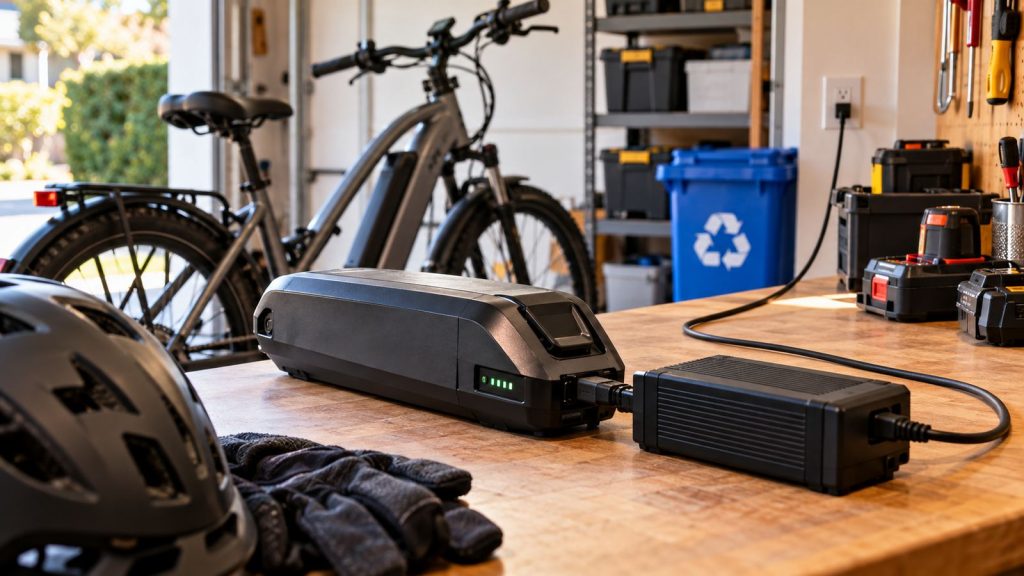
Pasadena residents who charge electric bicycles, scooters or power tools at home are being reminded to take a closer look at their charging habits following Fire Prevention Week, October 4 through 10, 2026.
The annual national safety campaign focused this year on lithium-ion batteries, the rechargeable power sources found in everything from smartphones and cordless drills to electric bikes and scooters.
For households across Pasadena, Altadena and the San Gabriel Valley, the message is straightforward: the batteries we rely on every day are generally safe when properly manufactured, maintained and charged, but damaged equipment and improper charging can create serious fire hazards.
The reminder also comes as California implements new safety requirements for electric bicycles and other powered mobility devices.
California’s New E-Bike Battery Safety Law
California Senate Bill 1271, signed into law in 2024, established new electrical safety testing requirements for electric bicycles, powered mobility devices and related equipment.
Beginning January 1, 2026, the law requires covered electric bicycles offered for sale or lease in California to meet applicable electrical system testing requirements.
For electric bicycles, recognized standards include ANSI/CAN/UL 2849 and EN 15194. Other powered mobility devices, including certain electric scooters, are subject to separate standards, including ANSI/CAN/UL 2272.
These standards are designed to address electrical safety risks involving batteries, charging systems and other components.
The legislation also establishes requirements for batteries and charging equipment. Separate rental provisions are scheduled to take effect January 1, 2028.
For consumers shopping for a new electric bicycle or scooter, the practical takeaway is to look for documented compliance with the applicable safety standard and testing by an accredited laboratory.
A low price alone does not establish that a product is unsafe, just as an expensive price does not guarantee proper testing. What matters is whether the electrical system and charging equipment meet recognized safety requirements.
Why Lithium-Ion Battery Fires Are a Concern
Lithium-ion batteries store substantial amounts of energy in relatively compact spaces.
That makes them useful for transportation, electronics and household tools. But when a battery is damaged, defective, improperly modified or charged using incompatible equipment, it can overheat.
In severe cases, a battery can experience thermal runaway, a process in which heat builds rapidly and can trigger fire or the release of flammable gases.
The consequences can be serious.
According to the U.S. Consumer Product Safety Commission, federal incident records identified 227 micromobility product electrical system incidents involving fire, explosion or overheating between 2019 and 2023.
Those incidents were associated with 39 deaths and 181 injuries.
The figures cover documented incidents involving micromobility products, not every lithium-ion battery fire nationwide.
New York City offers another example of the risks and the importance of prevention.
The New York City Fire Department reported 18 deaths associated with lithium-ion battery fires in 2023, compared with six in 2024 and one in 2025.
New York has implemented safety certification requirements alongside inspections, enforcement and public education campaigns. The decline is encouraging, although it cannot be attributed to any single measure.
How Pasadena Residents Can Charge Batteries More Safely
The National Fire Protection Association made safe charging the focus of Fire Prevention Week 2026, using the theme “Charge into Fire Safety: Safe Charging Is a Superpower.”
The recommendations apply to many rechargeable devices, including electric bicycles, scooters, laptops, cordless tools and other household electronics.
Use the correct charger. Always use the charger supplied by the manufacturer or a replacement specifically approved for the device. An incompatible charger can create electrical and overheating hazards.
Choose a safe charging surface. Charge devices on a hard, stable surface rather than on beds, couches, carpets or other combustible materials.
Unplug when charging is complete. Follow the manufacturer’s charging instructions and disconnect devices once they are fully charged.
Avoid unattended overnight charging. Whenever practical, charge batteries while someone is awake and able to recognize a developing problem.
Keep exits clear. Never charge or store electric bicycles, scooters or large battery packs where they could block a doorway, hallway, stairway or other escape route.
Consider outdoor charging for larger devices. When the manufacturer permits it, use a suitable, dry outdoor charging location away from combustible materials and building openings.
Watch for warning signs. Stop using a battery that becomes unusually hot, swells, leaks, produces strange odors or makes hissing or popping sounds.
If a battery begins smoking, burning or showing signs of imminent failure, move away, warn others and call 911. Do not attempt to handle a battery that is overheating or burning.
Where to Recycle Lithium-Ion Batteries in Pasadena
Battery safety does not end when a device stops working.
Lithium-ion batteries should never be placed in household trash or ordinary recycling containers. Improperly discarded batteries can cause fires in garbage trucks, recycling facilities and waste processing equipment.
The City of Pasadena provides specific disposal instructions through its Department of Public Works.
According to the city’s battery recycling guidance, rechargeable lithium-ion batteries can be taken to designated electronic waste collection events, eligible S.A.F.E. collection centers or participating hardware stores.
However, Pasadena’s library and community center battery collection receptacles do not accept lithium-ion batteries.
Medium and large lithium-ion batteries, including some batteries used in electric bicycles and other powered equipment, require special handling. Pasadena directs residents to contact the manufacturer for recycling options.
Before transporting or storing an intact battery for recycling, cover exposed terminals with tape or keep batteries individually separated to reduce the risk of short circuits.
Residents should not transport a swollen, leaking, smoking or otherwise unstable battery through an ordinary collection program without first obtaining appropriate disposal instructions.
The city’s official battery disposal guide is available through the Pasadena Department of Public Works website.
A Simple Safety Check for Pasadena Households
For many Pasadena residents, rechargeable batteries have quietly become part of everyday life.
An electric bicycle may be charging in the garage. A cordless drill battery might be sitting on a workbench. A scooter may be parked near the front door.
Most of the time, these devices attract little attention.
But Fire Prevention Week offers a useful reminder that a few simple precautions can make a meaningful difference.
Check the charger. Inspect the battery. Keep charging areas clear of combustible materials and escape routes. Make sure everyone in the household knows what to do if a battery begins overheating.
The technology is here to stay, and it offers real convenience. Using it responsibly is one more way Pasadena and San Gabriel Valley residents can help protect their homes, families and neighbors.